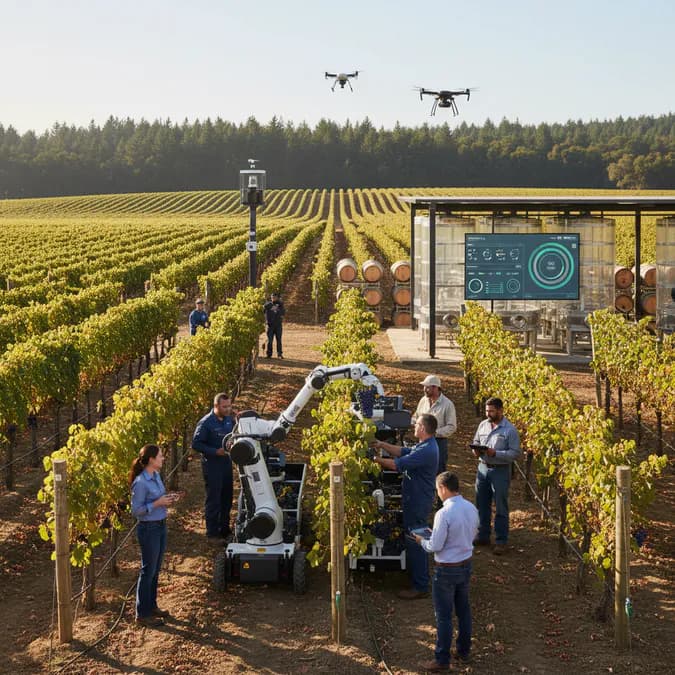
Key Takeaways
AI technology in wine production is revolutionizing Napa Valley by enhancing wildfire monitoring, improving vineyard protection, and ensuring exceptional grape quality. With innovative solutions like AI-powered sensor networks and expert insights, the future of wine production looks promising.
Key Takeaways
- AI technology in wine is crucial for monitoring environmental risks.
- Advanced sensor networks are being deployed to protect vineyards.
- Experts emphasize the need for adaptation in a changing climate.
Table of Contents
Overview of AI Technology in Wine
In the heart of California's wine country, Napa Valley faces increasing threats from wildfires, which can devastate vineyards and ruin grape harvests. To combat these challenges, Morgan Hill-based startup CladisIQ is deploying AI-powered sensor networks to provide wineries with hyperlocal weather and smoke data. This innovative approach is essential for ensuring the sustainability of Napa Valley's iconic wine production.
"AI technology in wine production represents a transformative approach to managing environmental risks and maintaining grape quality." - Dr. Elena Rodriguez, Agricultural Technology Expert
Wildfire Monitoring Innovations
Wildfires pose a severe threat to Napa Valley, where smoke taint can ruin grape harvests and flames endanger vineyards. The integration of AI technology in wine production is crucial in this context. Cal Fire's Sonoma-Lake-Napa unit is testing AI cameras that can detect fires within minutes, significantly reducing response times. This rapid detection is vital for protecting the vineyards and ensuring the quality of the grapes.
Advanced Agricultural Sensor Networks
Beyond fire detection, sensor networks in agriculture are becoming increasingly sophisticated. Santa Clara County has installed 30 N5 AI smoke sensors with machine learning capabilities and Starlink backup for enhanced wildfire detection. These advancements in AI technology in wine production are crucial for monitoring vineyard conditions and ensuring optimal grape quality.
Climate Change Challenges
Climate change has dramatically affected grape harvests in Napa Valley. A study highlighted a staggering 172% increase in burned areas from 1971 to 2021 due to human-caused climate change, underscoring the importance of advanced monitoring technologies. As the climate continues to shift, the role of AI technology in wine production becomes even more critical in adapting to these changes.
Expert Perspectives
"The integration of AI in wine production isn't just about technology—it's about survival and adaptation in a rapidly changing environmental landscape." - Michael Tracy, Vice President of Winemaking at Darioush
Future of Wine Production
As the wine industry continues to evolve, AI technology in wine production represents a promising frontier. By leveraging these innovations, Napa Valley wineries can better protect their vineyards, maintain wine quality, and ensure a sustainable future for this iconic region. The potential for AI to transform vineyard management practices is immense, paving the way for a more resilient wine industry.
Frequently Asked Questions
How does AI technology help in wildfire monitoring?
AI technology helps in wildfire monitoring by providing rapid detection through advanced camera systems that can identify fires within minutes, allowing for quicker response times and better protection of vineyards.
What are the benefits of using sensor networks in vineyards?
Sensor networks in vineyards provide real-time data on environmental conditions, enabling winemakers to make informed decisions about irrigation, pest control, and overall vineyard management, which ultimately improves grape quality.
How is climate change impacting Napa Valley's wine production?
Climate change is leading to increased wildfire risks and altering growing conditions, which can affect grape quality and harvest yields. AI technology in wine production is essential for adapting to these challenges.