The Brunello 2025 vintage in Tuscany presented one of the most unpredictable growing seasons in recent memory, with Brunello di Montalcino emerging as a case study in resilience and adaptive winemaking. Despite a rollercoaster of weather conditions—from warm springs to torrential rains, scorching heat, and unexpected September downpours—producers across Montalcino are reporting that the vintage has surpassed expectations, potentially delivering superior quality compared to the challenging 2024 vintage.
This comprehensive guide explores what made 2025 so unpredictable, how producers navigated these challenges, and what wine enthusiasts can expect from bottles bearing this vintage designation.
The Weather Rollercoaster: Understanding 2025's Unpredictability
The 2025 growing season in Montalcino defied conventional expectations at nearly every turn. The vintage began with a warm early spring, which initially suggested an early harvest and potentially high alcohol wines. However, this optimism was quickly tempered by excessive rainfall in April and May, creating concerns about fungal diseases and diluted fruit qual
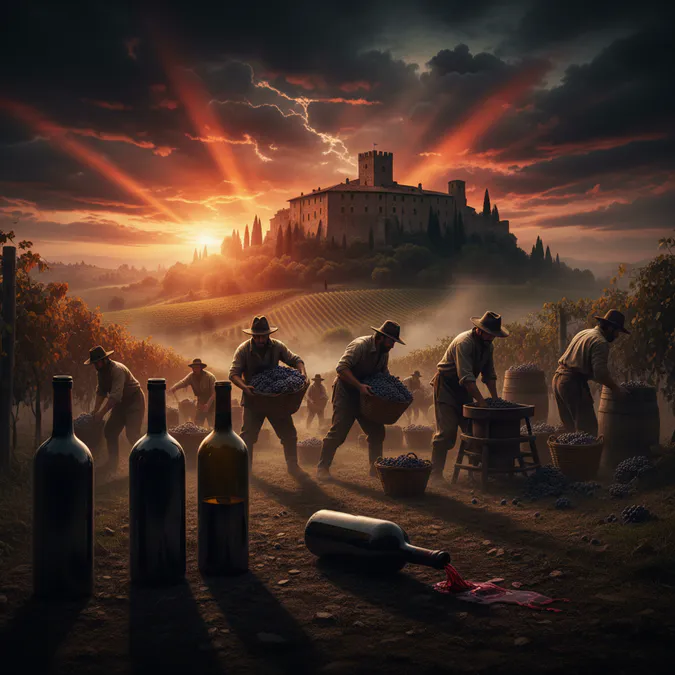
June brought intense heat, accelerating ripening and raising hopes for concentration. Yet nature had other plans. A cool interlude followed, slowing the ripening process and creating uncertainty about harvest timing. Then came mid-August's extreme heat—a scorching period that stressed vines and forced producers to make critical decisions about when to pick. Finally, September rains added another layer of complexity, requiring careful monitoring and selective harvesting.
As Jancis Robinson, the renowned wine writer and Master of Wine, noted: "Brunello farmers never knew what nature would throw at them next in 2025. Yet somehow they managed, even claiming that the vintage is better than 2024." This assessment captures the essence of 2025—a vintage that tested producers' skills and decision-making at every stage.
The Specific Weather Pattern
Understanding the precise sequence of weather events helps explain why 2025 was so challenging:
- Warm early spring: Set expectations for an early, potentially high-alcohol vintage
- Heavy April-May rains: Introduced disease pressure and dilution concerns
- Hot June: Accelerated ripening and concentrated sugars
- Cool interlude: Slowed ripening and created timing uncertainty
- Extreme mid-August heat: Stressed vines and forced harvest decisions
- September rains: Required selective harvesting and careful fruit selection
Brunello 2025: Quality Emerges from Chaos
Despite the challenging conditions, early reports from Montalcino's most respected producers paint an optimistic picture. The quality parameters emerging from 2025 Brunello grapes are remarkably positive, suggesting that the vintage will deliver wines of genuine distinction.
Federico Radi, Director of Viticulture and Oenology at the prestigious Biondi-Santi estate, provided detailed insights into the quality profile: "The 2025 harvest shows all the key quality parameters. It is not a particularly high-alcohol vintage; on the contrary, the grapes show remarkable freshness, and excellent pH values – perfectly in line with what we want for a Biondi-Santi wine."
This assessment is particularly significant because it highlights three crucial quality indicators:
- Moderate alcohol levels: Unlike some recent vintages that pushed toward 15% ABV or higher, 2025 Brunello is showing restraint, which typically correlates with better aging potential and elegance.
- Exceptional freshness: Despite the heat waves, the grapes retained acidity and vibrancy, suggesting the wines will have structure and complexity.
- Balanced pH: Optimal pH values indicate the wines will have proper color stability and microbial balance, essential for long-term cellaring.
Producer Confidence and Decision-Making
Radi also noted the psychological advantage producers enjoyed: "We were under no pressure; the weather allowed for thoughtful decision-making." This comment suggests that despite the unpredictability, the extended growing season gave producers flexibility in determining optimal harvest timing rather than rushing to pick before adverse weather.
The comparison to 2024 is particularly telling. The 2024 vintage was widely acknowledged as challenging, with many producers struggling with the conditions. That 2025 is being positioned as superior to 2024 suggests a meaningful step forward in quality, even if the path to achieving it was far more complicated.
Quality Metrics That Matter
The specific quality parameters Radi highlighted are worth understanding in detail:
- Alcohol content: Lower alcohol wines (typically 13.5-14.5% for Brunello) tend to show better balance and aging potential than higher-alcohol versions
- Freshness: Retained acidity provides structure and prevents the wines from becoming flabby or over-ripe in character
- pH balance: Proper pH ensures the wines will develop color stability and resist oxidation during aging
Strategic Yield Reductions and Market Pressures
While quality prospects brightened, producers faced significant market headwinds that influenced their decisions about yields. The Brunello di Montalcino Consorzio implemented a strategic reduction in permitted yields, cutting the maximum from 80 quintals per hectare to 70 quintals per hectare (excluding the first hectare, which has different regulations).
This yield reduction wasn't driven solely by quality considerations. Italy's 2025 harvest was projected at between 45 and 47.4 million hectoliters—a substantial volume that would add significantly to already abundant national wine stocks. The reduction in Brunello yields represented a deliberate effort to manage supply in the face of several market challenges:
- US tariffs on Italian wine imports, which have created uncertainty in one of Italy's most important export markets
- Declining demand from Russia, historically a significant market for premium Italian wines
- General market saturation with abundant stocks from previous vintages
Production Volume Context
The scale of Italy's 2025 harvest underscores the market pressures:
- 45-47.4 million hectoliters: Total projected Italian wine production for 2025, representing abundant supply
- 13% decline in Tuscany: Despite the overall abundance, Tuscany production fell 13% compared to the abundant 2024 vintage
- 3-4 tonnes per hectare: Typical yield levels for Brunello di Montalcino in 2025, significantly below historical averages
The Silver Lining of Yield Restrictions
For Brunello specifically, the yield reduction meant that many producers harvested at levels of 3-4 tonnes per hectare, significantly below historical averages. This constraint, while economically challenging for producers, likely contributed to the quality achievements. Lower yields typically concentrate flavors and produce more structured wines. In the context of 2025's unpredictable weather, the yield reduction may have been a blessing in disguise, forcing producers to be selective and ensuring that only the best-ripened fruit made it into the final wine.
Broader Italian Harvest Context
While Brunello 2025 faced specific challenges, the broader Italian wine harvest presents a more nuanced picture. Despite the abundance of volume—with projections of 45-47 million hectoliters—quality assessments across Italy have been remarkably positive.
The 2025 harvest has won widespread praise for quality across multiple regions. Healthy vines and early ripening in many areas created conditions for excellent fruit quality, even as volume concerns persist. This paradox—abundant quantity but excellent quality—reflects the complexity of modern viticulture in the face of climate variability.
Adaptive Viticulture Strategies
Producers across Italy have increasingly adopted adaptive viticulture practices to address climate challenges. These strategies include:
- High-altitude vineyards: Leveraged to preserve acidity in warming conditions, ensuring wines maintain freshness and structure
- Selective harvesting: More careful fruit selection to manage ripeness levels and alcohol content
- Canopy management: Adjusted to balance sun exposure and prevent over-ripeness
- Yield management: Strategic reductions to concentrate flavors and quality
These adaptive approaches suggest that Italian winemakers are learning to work with, rather than against, the new climate realities. The success of 2025 across multiple regions demonstrates that while climate change presents challenges, skilled producers can navigate them effectively.
Market Dynamics and Pricing Implications
The abundance of the 2025 harvest does create market pressures, particularly for lower-value wines. However, for prestigious appellations like Brunello di Montalcino, the combination of quality and scarcity (due to yield reductions) may actually support pricing and desirability. Collectors and wine enthusiasts seeking premium Italian wines may find 2025 Brunello particularly attractive precisely because it combines excellent quality with limited production.
What Collectors Should Know
For wine collectors and enthusiasts considering 2025 Brunello, several key takeaways emerge from the harvest reports and producer assessments:
Quality Potential and Aging
Early indicators suggest 2025 will be a quality vintage worthy of cellaring. The moderate alcohol levels, freshness, and balanced pH values indicate wines with aging potential. Brunello di Montalcino is traditionally a wine meant for long-term cellaring, and 2025 appears to have the structural components necessary for 15-20+ years of development in the bottle.
Scarcity and Collector Interest
Yield reductions mean 2025 Brunello will be produced in smaller quantities than some recent vintages. This scarcity, combined with quality, could support strong collector interest. In the wine market, the combination of excellent quality and limited production typically creates favorable conditions for appreciation.
Vintage Character and Complexity
This is a vintage that will reward patience. The complexity of the growing season likely produced wines with nuance and layers that will develop over time in the bottle. The unpredictability that challenged producers during the growing season may ultimately contribute to wines with greater complexity and interest than more straightforward vintages.
Comparative Value Proposition
As a vintage superior to the challenging 2024, but produced in smaller quantities than abundant 2024, 2025 may offer compelling value for collectors seeking quality Brunello. The combination of quality improvement and scarcity creates an attractive proposition for those building cellars.
Producer Selection Importance
The unpredictability of 2025 means that producer skill and decision-making were paramount. Established producers with strong track records, like Biondi-Santi, likely navigated the challenges more effectively than less experienced operations. When purchasing 2025 Brunello, collector attention to producer reputation and track record becomes even more important than usual.
Tasting Notes and Expectations
Based on the quality parameters reported, 2025 Brunello should display:
- Elegant structure with moderate alcohol (13.5-14.5% ABV)
- Fresh acidity providing vibrancy and aging potential
- Balanced tannins reflecting the Sangiovese grape's natural characteristics
- Complex fruit profiles with layers that will develop over time
- Potential for 15-20+ years of cellaring
Frequently Asked Questions
What makes the Brunello 2025 vintage unique?
The Brunello 2025 vintage is unique due to its unpredictable weather patterns, which included warm springs, heavy rains, and extreme heat. Despite these challenges, the vintage is expected to deliver high-quality wines with moderate alcohol levels and exceptional freshness.
How does the 2025 vintage compare to previous years?
The 2025 vintage is considered superior to the challenging 2024 vintage, offering better quality and aging potential. It is produced in smaller quantities, adding to its desirability among collectors.
What should collectors consider when purchasing 2025 Brunello?
Collectors should pay attention to producer reputation and track record, as the unpredictable growing season required skilled decision-making. The limited production and high quality of the 2025 vintage make it a valuable addition to any wine collection.
The Bottom Line
The 2025 Brunello di Montalcino vintage represents a fascinating case study in how modern winemakers navigate increasingly unpredictable climate conditions. What could have been a disaster—with erratic weather, market pressures, and yield restrictions—instead appears to have produced a vintage of genuine quality and character.
The combination of excellent quality parameters, strategic yield management, and producer expertise suggests that 2025 Brunello will occupy an important place in the region's recent history. For collectors, this vintage offers the prospect of elegant, age-worthy wines produced in limited quantities—a compelling proposition in an era of climate uncertainty.
As the 2025 vintage moves from barrel to bottle over the coming years, the full story of this unpredictable growing season will continue to unfold. Early indications, however, suggest that Brunello producers have once again demonstrated their ability to craft exceptional wines despite—or perhaps because of—the challenges nature presented. For those interested in premium Italian wine, 2025 Brunello deserves serious consideration.
Sources
- Automated Pipeline
- Brunello 2025 – unpredictable and challenging
- Montalcino Previews 2025: Brunello 2021, Brunello Riserva 2020
- Italy's 2025 Harvest Begins with Strong Quality Prospects and Strategic Yield Cuts
- Harvest Report 2025
- The 2025 Harvest Wins Unanimous Praise
- Source: winenews.it
- Source: bkwine.com
- Source: cluboenologique.com
- Source: grandcrugrapes.com