
The 2025 grape crush wine in California represents a critical turning point for the North American wine industry. At 2.62 million tons, it marks the smallest harvest since 1999, signaling a necessary market correction after years of inventory buildup. While this volume exceeded initial industry projections, it remains 23% below the five-year average and 8% below 2024 levels, reflecting both intentional supply reduction and structural challenges facing growers.
This contraction comes as the industry grapples with persistent inventory glut, declining global wine demand, and shifting consumer preferences. The implications extend far beyond California's borders, affecting bulk wine markets on the Central Coast, pressuring British Columbia growers with rising costs, and influencing international releases like Bordeaux En Primeur 2026.
Understanding these dynamics is essential for wine professionals, investors, and enthusiasts navigating the 2026 market landscape.
The 2025 Grape Crush: Smaller Than Expected But Still Significant
The 2025 California grape crush totaled 2.62 million tons, representing the smallest harvest since 1999. This volume declined 8% from 2024 and fell 23% below the five-year average, according to the California Department of Food and Agriculture Preliminary Grape Crush Re
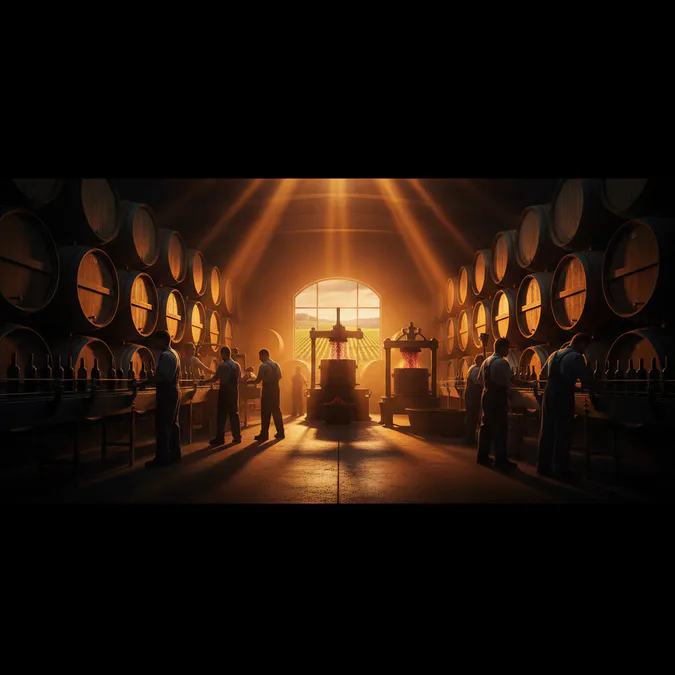
Steve Fredricks, President of Turrentine Brokerage, the largest California grape and bulk wine brokerage, characterized the outcome positively: "The decrease in tons is still very positive news for the industry overall. The 2025 crop is the lightest on record since 1999, representing a necessary correction in volume."
However, the Turrentine Brokerage Analysis Team offered a more sobering assessment: "The 2025 vintage is one of the most challenging for the wine industry since Prohibition. This statewide volume is above initial projections but reflects the structural challenges facing California growers."
The crop value declined dramatically, falling 16% from 2024 to $2.414 billion and 22% below the five-year average. This represents a loss of approximately $330 billion in total crop value compared to historical averages, underscoring the economic pressure facing California's vineyard sector.
White Grapes Dominate for First Time Since 1996
A remarkable shift occurred in 2025: white wine varieties accounted for the largest share of grapes crushed for the first time since 1996. White grapes totaled 1.316 million tons, slightly exceeding red grapes at 1.306 million tons. This represents a significant departure from decades of red grape dominance in California production.
White varieties declined 6.0% year-over-year, while red varieties fell 10.8% year-over-year, according to the California Department of Food and Agriculture. The shift reflects changing production patterns and market dynamics rather than a preference for white wine expansion.
Sauvignon Blanc Reaches All-Time High
Sauvignon Blanc production reached an all-time high of 161,000 tons in 2025, up 16% year-over-year and 17% above the five-year average. This surge occurred despite prices falling across all major production districts, creating a paradoxical situation where record production volumes coincided with declining value.
The North Coast region led Sauvignon Blanc production, with output 32% above the five-year average. Yet despite this strong production volume, growers faced significant price pressures, illustrating the disconnect between supply and demand in the current market environment.
This phenomenon highlights a critical market dynamic: even trendy, high-demand varieties cannot escape the broader oversupply conditions affecting California's wine industry. Producers banking on Sauvignon Blanc's popularity found that record volumes overwhelmed market demand.
Inventory Crisis Drives Market Dynamics
California winery inventories reached approximately 84 million excess cases by mid-2025, representing nearly 30% above ideal levels. This oversupply is equivalent to approximately 1.2 million tons of grapes with no immediate market, according to Wine Industry Analysis data.
This inventory glut stems from multiple factors:
- Declining global wine demand reducing consumption rates
- Inflation pressuring consumer spending on discretionary items like wine
- Shifting preferences toward lower-alcohol and natural wines
- Lingering effects of pandemic-era production decisions
The excess inventory has suppressed grape prices across major varieties. Grape prices fell 3.8% on average in 2025, with major varieties experiencing significant declines. Cabernet Sauvignon, Chardonnay, Pinot Noir, and Zinfandel all faced substantial value reductions, reflecting the broader market imbalance between supply and demand.
The inventory crisis represents the most significant market challenge facing the industry. At current demand levels, the 84 million excess cases represent approximately two years of supply beyond normal market requirements, suggesting continued pricing pressure through 2026 and potentially into 2027.
Vineyard Removals Accelerate Across California
The challenging market conditions have prompted dramatic action from California growers. Nearly 40,000 acres of California vineyards were removed between October 2024 and August 2025, representing approximately 7.5% of total acreage. Industry analysts expect additional removals in 2026 as growers without long-term contracts exit the market.
These removals represent a structural reshaping of California's wine geography. Growers unable to secure favorable contracts or facing unsustainable economics are abandoning vineyard operations, concentrating production among larger, better-capitalized producers with established distribution networks.
Long-Term Implications of Vineyard Consolidation
The removals are expected to continue as market conditions remain challenging. This represents the most significant vineyard contraction since the phylloxera crisis of the late 19th century, fundamentally altering California's wine production capacity.
The consolidation trend favors established producers with:
- Long-term grape supply contracts providing price stability
- Established brand recognition supporting premium pricing
- Diversified distribution networks reducing market dependence
- Financial resources to weather extended downturns
Smaller, independent growers without these advantages are exiting the market, reducing the total number of vineyard operations while increasing the average size of remaining producers. This consolidation may ultimately improve industry profitability by reducing excess capacity, but it comes at significant cost to displaced growers and rural communities dependent on vineyard employment.
Central Coast Bulk Wine Market Activity
The Central Coast bulk wine market is experiencing notable activity and price movements as producers adjust to the new supply reality. The region, which includes San Luis Obispo and Santa Barbara counties, serves as a critical hub for bulk wine trading and production.
Bulk wine markets typically reflect broader industry dynamics, with prices responding to inventory levels, demand forecasts, and vintage quality assessments. The 2025 crush has created significant trading activity as producers seek to optimize their inventory positions and secure supplies for 2026 production and blending operations.
Central Coast producers are navigating the tension between holding inventory for potential price recovery and liquidating excess stock to manage carrying costs. This dynamic is creating opportunities for strategic buyers while pressuring sellers with aging inventory.
The Central Coast market serves as a barometer for broader industry health. Activity levels, pricing trends, and transaction volumes in this region provide early signals about whether the industry is stabilizing or facing continued contraction. Current market conditions suggest ongoing adjustment as producers recalibrate production plans and inventory strategies.
British Columbia Wine Growers Face Cost Pressures
While California grapples with oversupply, British Columbia wine growers face a different challenge: rising operational costs. The region's wine industry is experiencing significant cost inflation affecting everything from labor and equipment to packaging and distribution.
These cost pressures are particularly acute for smaller producers lacking the economies of scale of larger operations. British Columbia's wine industry, which has grown substantially over the past two decades, faces pressure to maintain profitability despite increasing input costs.
The cost pressures in British Columbia contrast with California's volume challenges, illustrating the diverse pressures facing North American wine producers. While California struggles with excess supply, British Columbia growers must manage margin compression from rising expenses.
British Columbia producers are exploring several strategies to manage cost pressures:
- Focusing on premium segments where price increases are more sustainable
- Investing in operational efficiency to reduce per-unit costs
- Developing direct-to-consumer channels to capture higher margins
- Collaborating with other producers to achieve economies of scale
Bordeaux En Primeur 2026 Release
The Bordeaux En Primeur 2026 vintage has been released, offering international market signals about fine wine demand and pricing expectations. The En Primeur system, where wines are sold before bottling, serves as a barometer for global fine wine sentiment.
According to the Bordeaux Wine Council's En Primeur 2026 Vintage Report, the release reflects current market conditions and producer expectations for the vintage. The pricing and reception of Bordeaux En Primeur 2026 provide insights into how international markets are responding to the broader wine industry contraction.
Bordeaux's release timing coincides with California's inventory challenges, creating a complex global market environment where both Old World and New World producers are adjusting to reduced demand and elevated inventory levels. The En Primeur release provides a crucial test of whether fine wine demand remains resilient despite broader industry challenges.
Fine wine markets typically show more resilience than commodity wine segments during downturns, as collectors and investors continue purchasing prestigious vintages. However, the 2026 En Primeur release will reveal whether even fine wine demand is affected by the broader economic pressures affecting the global wine industry.
Market Outlook and Demand Projections for 2026
The 2026 market outlook reflects the structural challenges evident in 2025 data. Global wine demand remains under pressure from multiple factors:
- Economic uncertainty reducing discretionary spending
- Inflation pressuring consumer budgets
- Changing consumer preferences favoring lower-alcohol and natural wines
- Shifting demographics with younger consumers drinking less wine
The smaller 2025 crush will gradually reduce California's inventory glut, but the process will be gradual. At current demand levels, the 84 million excess cases represent approximately two years of supply beyond normal market requirements. This suggests continued pricing pressure through 2026 and potentially into 2027.
However, the smaller crush volume should eventually support price stabilization as inventory levels normalize. Producers who can maintain operations through the current downturn may benefit from improved pricing once supply-demand balance is restored.
The shift toward white grape production, particularly Sauvignon Blanc, reflects market signals about consumer preferences. However, the price declines accompanying record Sauvignon Blanc production suggest that supply has outpaced demand even for trendy varieties. This indicates that demand recovery, not production shifts, is the critical factor determining whether pricing improves in 2026.
Regional Industry Implications
The 2025 crush and subsequent market dynamics have profound implications for California's wine regions. Premium regions with established brand recognition and long-term contracts are weathering the downturn better than commodity-focused areas.
Premium vs. Commodity Regions
North Coast regions, including Napa and Sonoma, maintain stronger pricing power due to brand equity and established distribution networks. Central Coast regions face more significant pressure as they compete in the bulk wine and mid-tier market segments most affected by oversupply.
The vineyard removals are concentrating in regions with weaker brand positioning and growers lacking contract security. This is reshaping California's wine geography, with production consolidating in premium regions while commodity production contracts.
National and International Implications
For British Columbia and other non-California regions, the California contraction creates both challenges and opportunities. The reduced California supply may support prices for competing regions, but only if global demand stabilizes. The cost pressures facing British Columbia growers suggest that regional competitiveness depends on managing expenses while maintaining quality standards.
International regions like Bordeaux face similar dynamics, with the En Primeur 2026 release serving as a test of whether fine wine demand remains resilient. The global wine industry is undergoing a fundamental rebalancing, with structural changes likely to persist beyond the current downturn.
Key Takeaways for Wine Industry Stakeholders
The 2025 grape crush and subsequent market developments signal a fundamental industry correction. The smallest harvest since 1999 reflects necessary supply reduction, but the 84 million excess cases indicate that inventory normalization will take years.
White grape varieties, particularly Sauvignon Blanc, are experiencing record production volumes despite price declines, suggesting oversupply even in trendy categories. The shift toward white grapes for the first time since 1996 represents a significant production reorientation that has not yet translated into improved pricing.
Vineyard removals totaling 40,000 acres represent a structural reshaping of California's wine geography, concentrating production among larger, better-capitalized producers. This trend is expected to continue as growers without contract security exit the market, fundamentally altering the industry's competitive landscape.
Regional dynamics vary significantly, with California facing inventory challenges while British Columbia growers manage cost pressures. The Bordeaux En Primeur 2026 release reflects global market conditions affecting both Old World and New World producers, serving as a critical indicator of fine wine demand resilience.
The 2026 market outlook depends on whether global wine demand stabilizes. If demand remains depressed, pricing pressure will persist despite the smaller crush. However, if demand recovers, the reduced supply from the 2025 crush and ongoing vineyard removals should eventually support price improvement.
Wine professionals, investors, and enthusiasts should monitor inventory levels, regional production patterns, and global demand indicators as key metrics for assessing the industry's recovery trajectory. The next 12-24 months will be critical in determining whether the 2025 crush represents the beginning of sustainable market rebalancing or merely a pause in a longer-term industry contraction.
Frequently Asked Questions
What is the 2025 grape crush wine?
The 2025 grape crush wine refers to the total volume of grapes harvested in California, which was 2.62 million tons, marking the smallest harvest since 1999.
How does the 2025 grape crush impact wine prices?
The smaller harvest is expected to create continued pricing pressure due to the existing inventory glut, but it may lead to price stabilization as inventory levels normalize.
What trends are emerging from the 2025 grape crush?
Notable trends include a shift towards white grape production, particularly Sauvignon Blanc, which reached an all-time high despite overall price declines.