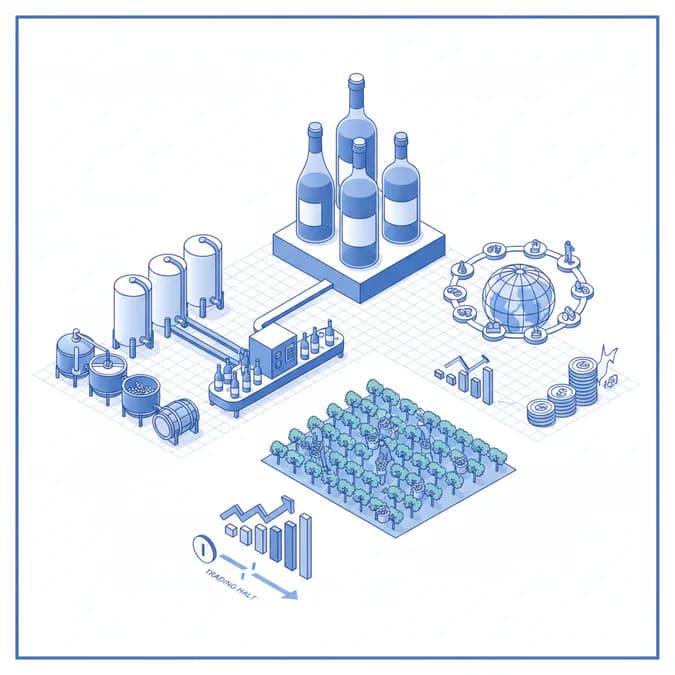
On December 15, Treasury Wine Estates (TWE) announced a request for a trading halt on its shares, signaling significant developments ahead. This decision comes as the company prepares to release an important outlook update, which could have substantial implications for its investors and the broader wine market. In this article, we will delve into the details of the trading halt, provide an overview of Treasury Wine Estates, and discuss the potential market implications.
Company Overview
Treasury Wine Estates is one of the largest wine companies globally, known for its diverse portfolio of brands that include Penfolds, Wolf Blass, and Lindeman's. Founded in 2011, TWE has established itself as a leader in the wine industry, with operations spanning across Australia, the United States, and Europe. The company focuses on premium wines and has been recogniz
With a market capitalization of approximately AUD 10 billion, TWE has consistently performed well in the competitive wine market. The company reported a revenue of AUD 2.6 billion for the fiscal year 2022, showcasing its robust position in the industry. As consumer preferences shift towards premium wines, TWE has strategically positioned itself to capitalize on this trend, making its upcoming outlook update particularly significant.
Trading Halt Details of Treasury Wine Estates
The trading halt requested by Treasury Wine Estates is a precautionary measure that allows the company to prepare for the release of its outlook update. This pause in trading is not uncommon in the corporate world, especially when companies anticipate significant announcements that could affect their stock prices. The halt will remain in effect until the company provides further information regarding its outlook, which is expected to be released shortly.
This trading halt is particularly noteworthy given the current volatility in the global wine market, influenced by various factors such as changing consumer preferences, supply chain disruptions, and economic conditions. Investors are keenly awaiting the update, as it may provide insights into TWE's growth strategies and financial performance in the coming quarters.
Market Implications of Treasury Wine Estates' Trading Halt
The implications of Treasury Wine Estates' trading halt extend beyond the company itself. Investors and analysts will be closely monitoring the situation, as the outlook update could set the tone for the entire wine industry. If TWE announces strong growth projections or innovative strategies, it could bolster investor confidence and positively impact stock prices across the sector.
Conversely, if the outlook reveals challenges or lower-than-expected growth, it may lead to a decline in TWE's stock price and potentially affect other wine companies as well. The wine industry has seen fluctuations in demand, especially post-pandemic, and how TWE navigates these challenges will be critical for its future success.
Key Takeaways
- Treasury Wine Estates has requested a trading halt to prepare for an important outlook update.
- The halt is significant for investors and the broader wine market.
- Market implications could influence stock prices across the wine industry.
Frequently Asked Questions (FAQ)
What is Treasury Wine Estates?
Treasury Wine Estates is a leading global wine company with a portfolio that includes renowned brands like Penfolds and Wolf Blass.
Why did Treasury Wine Estates request a trading halt?
The trading halt was requested to prepare for the release of an important outlook update that could impact stock prices.
What are the potential market implications of the outlook update?
The outlook update could either bolster investor confidence with positive projections or lead to declines if challenges are revealed.
In conclusion, Treasury Wine Estates' request for a trading halt is a significant development in the wine industry. As the company prepares to release its outlook update, stakeholders are left to speculate on the potential outcomes and their implications for the market. Investors should stay informed and ready to react as new information becomes available, as it could shape the future of not only TWE but the broader wine sector as well.