
Introduction: The Emergence of Bhutanese Wine
Bhutan, the Himalayan kingdom renowned for its commitment to Gross National Happiness, is embarking on an ambitious journey to develop a wine industry from scratch. With the establishment of the Bhutan Wine Company in 2019, the country is not only cultivating vineyards but also creating a unique identity in the world of fine wine. This article explores the emergence of Bhutanese wine
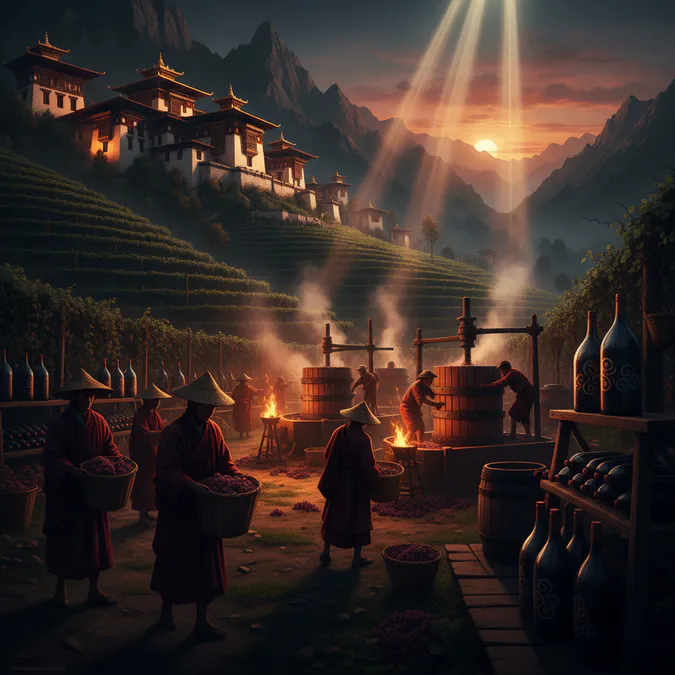
Bhutan Wine Company: Pioneering the Industry
The Bhutan Wine Company has made significant strides since its inception, establishing vineyards across nine sites covering a total of 200 hectares, with 50 hectares currently under vine. The company has introduced 16 international grape varieties, including:
- Red Varieties: Syrah, Pinot Noir, Cabernet Sauvignon, Merlot, Malbec, Tempranillo
- White Varieties: Sauvignon Blanc, Chardonnay, Riesling, Chenin Blanc, Traminette
These grapes have been carefully selected and adapted to Bhutan's high-altitude, cool climate, which is ideal for viticulture. The first commercial wines from the 2024 vintage will include an off-dry Riesling, dry Sauvignon Blanc, a Chenin/Chardonnay blend, Syrah rosé, Bordeaux blends, and Pinot Noir, marking a significant milestone for the country’s wine production efforts [CNA Luxury].
Local Values and Spiritual Traditions in Winemaking
One of the most distinctive aspects of Bhutan's wine industry is its integration of local values and spiritual traditions into the winemaking process. The Bhutan Wine Company emphasizes principles derived from Buddhism, such as moderation, peaceful intention, and minimal harm. According to Matt Brain, the winemaker at Bhutan Wine Company, "Our company has incorporated Buddhist values in almost all facets of its operation. Principles like moderation, peaceful intention, and minimal harm influence farming in our vineyards and the vinification of our wines" [CNA Luxury].
This commitment to sustainability and organic practices not only enhances the quality of the wine but also aligns with Bhutan’s broader environmental ethos. The government has provided support in the form of land and technical assistance, allowing local farmers to be trained in viticulture and participate in this new industry.
Challenges and Opportunities in a New Winemaking Frontier
While the establishment of a wine industry in Bhutan presents exciting opportunities, it is not without its challenges. The country’s unique climate and geographical conditions require careful consideration in vineyard management and grape selection. The high altitudes, such as those in Paro at 2,300 meters, offer a pristine environment for viticulture but also pose challenges in terms of growing conditions and grape ripening.
Despite these hurdles, the Bhutan Wine Company is optimistic about the future. Plans are underway to expand vineyard acreage from the current 200 acres to 2,000 acres over the next 5 to 7 years, exploring new microclimates and varietals [The Buyer].
The Future of Wine in Bhutan
As Bhutan prepares for its first commercial harvest and the launch of its wines in 2024, the country is poised to make a significant impact on the global wine market. The auction of historic first vintage wines, including the Ser Kim range, will feature prices ranging from $80 for a rosé to $500 for a Pinot Noir, marking Bhutan's entry into international wine markets [Bonhams].
The cultivation of a new wine region is a rare occurrence, with experts noting that it has likely not happened in over 150 years [The Buyer]. As Bhutanese wine gains recognition, it is expected to attract attention from wine enthusiasts and collectors around the world.
Conclusion
Bhutan's venture into winemaking represents a unique blend of tradition and innovation, reflecting the country's cultural values and commitment to sustainability. With the Bhutan Wine Company leading the charge, the Himalayan kingdom is not only cultivating vineyards but also creating a new identity in the world of fine wine. As Bhutan prepares to unveil its first commercial wines, the future looks bright for this emerging wine industry, promising to offer a distinct and flavorful experience that resonates with both local and global audiences.
Key Takeaways
- Bhutan is developing its wine industry, led by the Bhutan Wine Company.
- The country is cultivating various grape varieties suited for its unique climate.
- Local traditions and Buddhist values play a significant role in the winemaking process.
- Challenges exist due to geographical conditions, but the future looks promising.
- Bhutan is set to launch its first commercial wines in 2024.
FAQs
What types of wine are produced in Bhutan?
Bhutan produces a variety of wines, including Riesling, Sauvignon Blanc, and Pinot Noir, among others.
How does Bhutan incorporate local traditions into winemaking?
The Bhutan Wine Company integrates Buddhist principles such as moderation and minimal harm into its winemaking practices.
What challenges does Bhutan face in developing its wine industry?
Challenges include high altitude, climate conditions, and the need for careful vineyard management.
When will Bhutan's first commercial wines be available?
The first commercial wines from Bhutan are expected to be launched in 2024.